








Sponsors



Partner



















Z365" or "Festival all year round" is the new strategic point of the Festival in which converge investigation, accompaniment and development of new talents (Ikusmira Berriak, Nest); training and cinematic knowledge transfer (Elías Querejeta Zine Eskola, Zinemaldia + Plus, Filmmakers' dialogue); and investigation, disclosure and cinematic thought (Z70 project, Thought and Discussion and Research and publications).
 Calls for entries - 2026 Log-in to MY FESTIVAL
  Agenda Programme and tickets Search
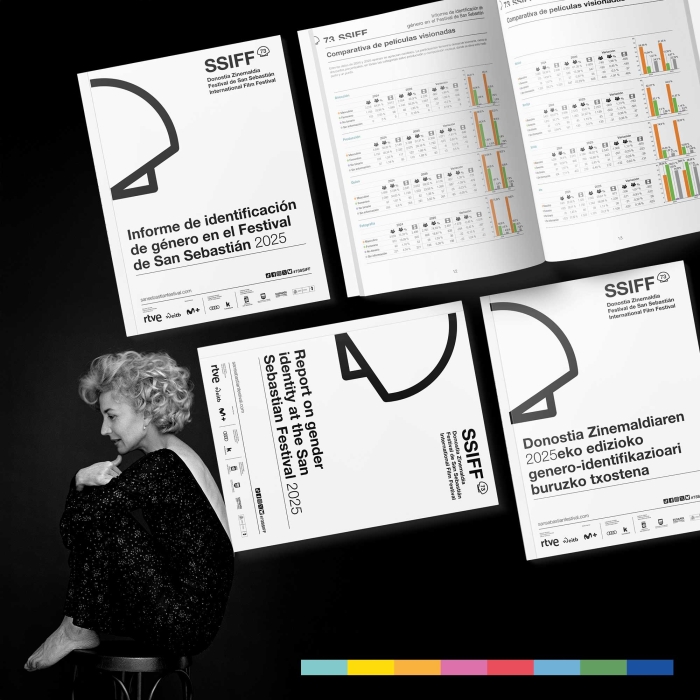
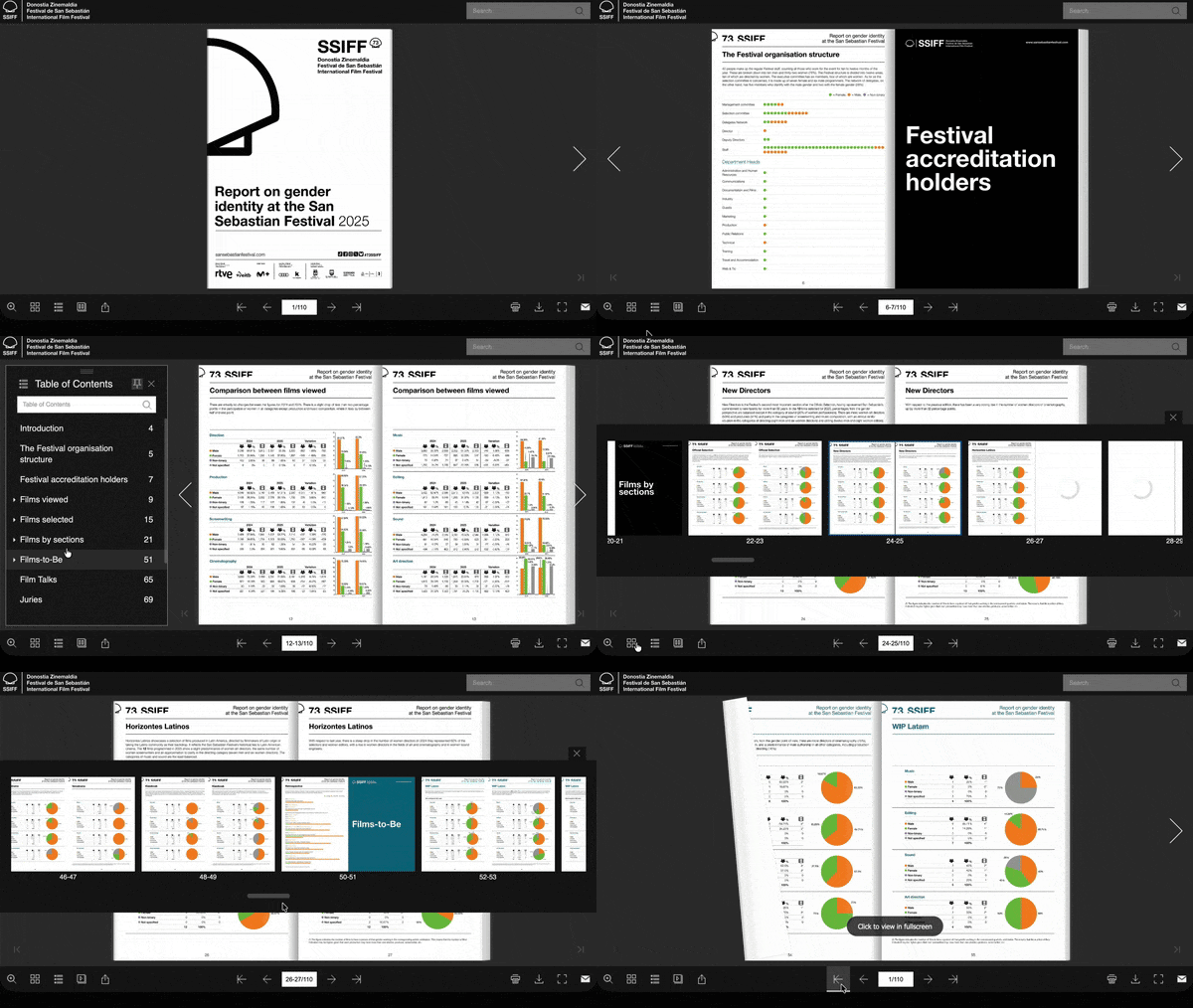
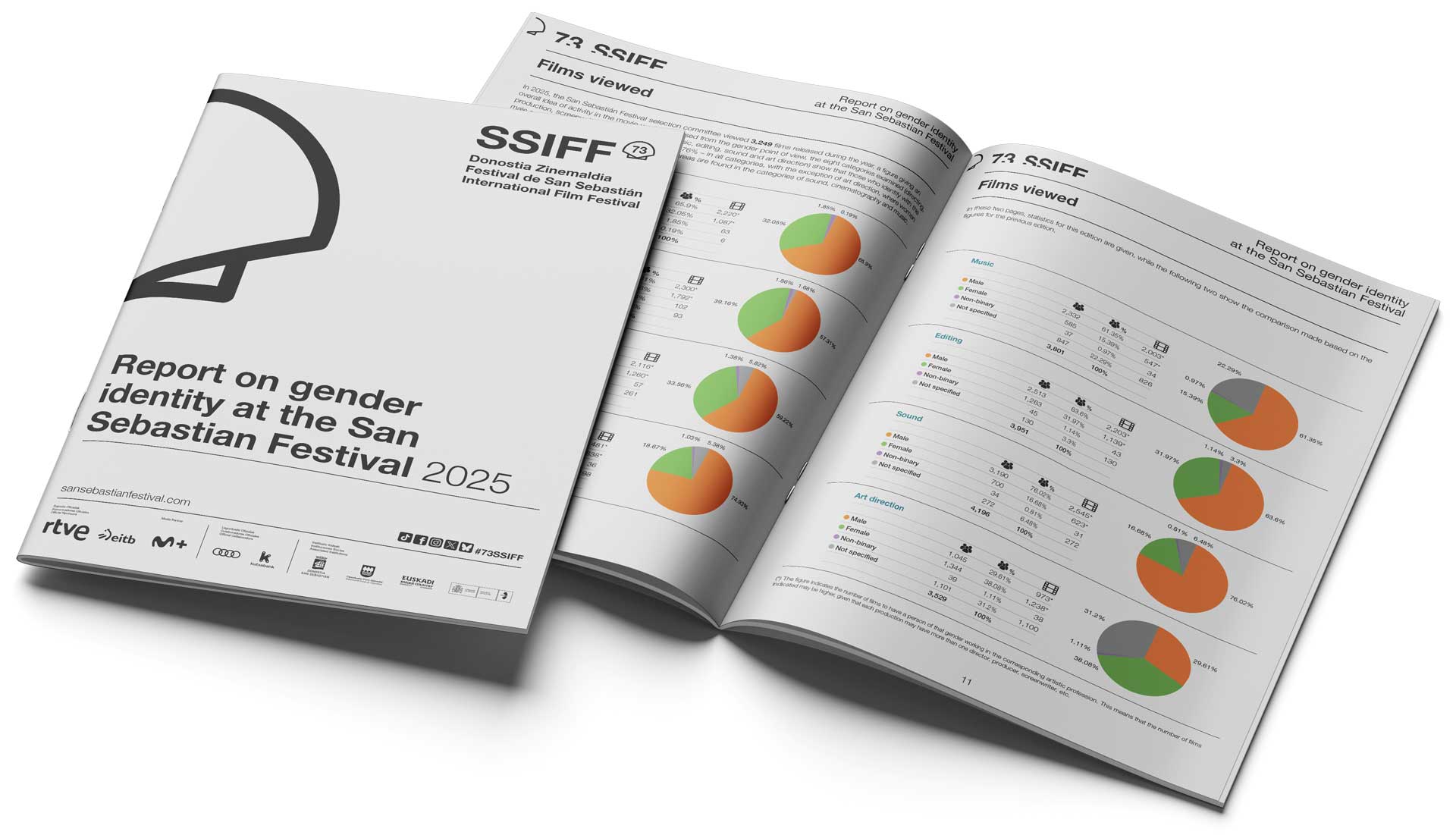
The San Sebastián Festival’s seventh gender identity report focused on the more than 3,200 films viewed by the selection committee (thus enabling us to draw general conclusions with regard to the year’s film production), analyses the presence of women filmmakers in eight categories: directing, production, screenplay, photography, music, editing, sound and art direction. The average participation of women professionals stands at between 15% and 39% and the presence of the female gender is only in the majority in art direction. Production (39%), screenplay (33%), directing (32%) and editing (31%) are, in this order, the areas showing the least balance.
If the overall number of films viewed is a matter dependent on general production, the responsibility for those selected falls upon the Festival. The 174 films programmed this year had a higher proportion of women screenwriters, directors, music composers and editors than the total number of films viewed. In the analysis by area, compared to the balance of New Directors, the section for the first and second films by their filmmakers, the Official Selection showed a drop in the number of women directors (from 43% to 30%) when compared with last year’s figures.
One of the sections to have experienced the highest growth with respect to the presence of women professionals is Made in Spain, where there are 55% of women screenwriters, 53% of women directors and 52% of women editors. This said, these figures do not correlate with the total number of films with Spanish production viewed, where male authorship is higher in all professions, with the exception of art direction. As far as Basque productions are concerned, while the trend of higher figures of participation by women than the overall average remains in place, their representation has dropped in 2025 with respect to all professions, except for production and editing.
For the first time since this report was drawn up, the retrospective focussed on the figure of a woman, the screenwriter Lillian Hellman. By comparison, Klasikoak, the section featuring classics old and new from the universal history of film includes no women directors, producers, directors of cinematography, sound engineers or art directors.
However, in the immediate present and future, from the gender perspective, the new generation emerging in the film industry combined with the Festival’s commitment to achieving parity from the early days of a career translate into the positive figures of the event’s two project-oriented programmes. In the Europe-Latin America Co-Production Forum, the 15 selected projects had 52% of women producers, 46% of women directors and 45% of women screenwriters. In the Ikusmira Berriak residencies, there were 57% of women screenwriters and 50% of women directors and producers. Lastly, in Nest, the section for the works of students from film schools around the globe, there was a significant majority of women producers (72%), women directors (64%) and women screenwriters (60%).
On accepting her Donostia Award at the opening gala of the 73rd edition, the producer Esther García cast her eyes back to her complicated early days in the profession as “a very young woman in a world of men, with limited training and eagerly looking for references”, amongst whom she mentioned Pilar Miró, Josefina Molina, Patricia Ferreira and Cristina Huete. “There weren’t many of us, but we fought and continued to find our space in this beloved profession”, she recalled, going on to ratify the figures appearing in this report by saying: “There’s still a long way to go. Not one step backwards ladies!”


















Monday to Sunday from 09:00 to 14:00
and from 16:00 to 20:00