








Sponsors


Partner


















Z365" or "Festival all year round" is the new strategic point of the Festival in which converge investigation, accompaniment and development of new talents (Ikusmira Berriak, Nest); training and cinematic knowledge transfer (Elías Querejeta Zine Eskola, Zinemaldia + Plus, Filmmakers' dialogue); and investigation, disclosure and cinematic thought (Z70 project, Thought and Discussion and Research and publications).
 Calls for entries - 2026 Log-in to MY FESTIVAL
  Agenda Programme and tickets Search

In 2020, the San Sebastián Festival set out on a road towards a more sustainable environmental model. Not as a symbolic gesture or passing trend, but as a true process of internal revision, given our understanding that the climate crisis is not a matter set apart from culture, but that it is also woven into the way we produce that culture.
During these six years we have asked ourselves: How can an international festival (a physical event visited by a global network of filmmakers, teams and audience who flock here from all over the world) reduce its impact without losing its essence? Our intention was not to take drastic solutions or superficial decisions, meaning that we had to tackle more complex and less obvious issues: changing the way we work, reviewing procedures and making decisions designed to last over time. Thus, in these six years, we have turned our attention to reducing, changing, reusing and compensating.
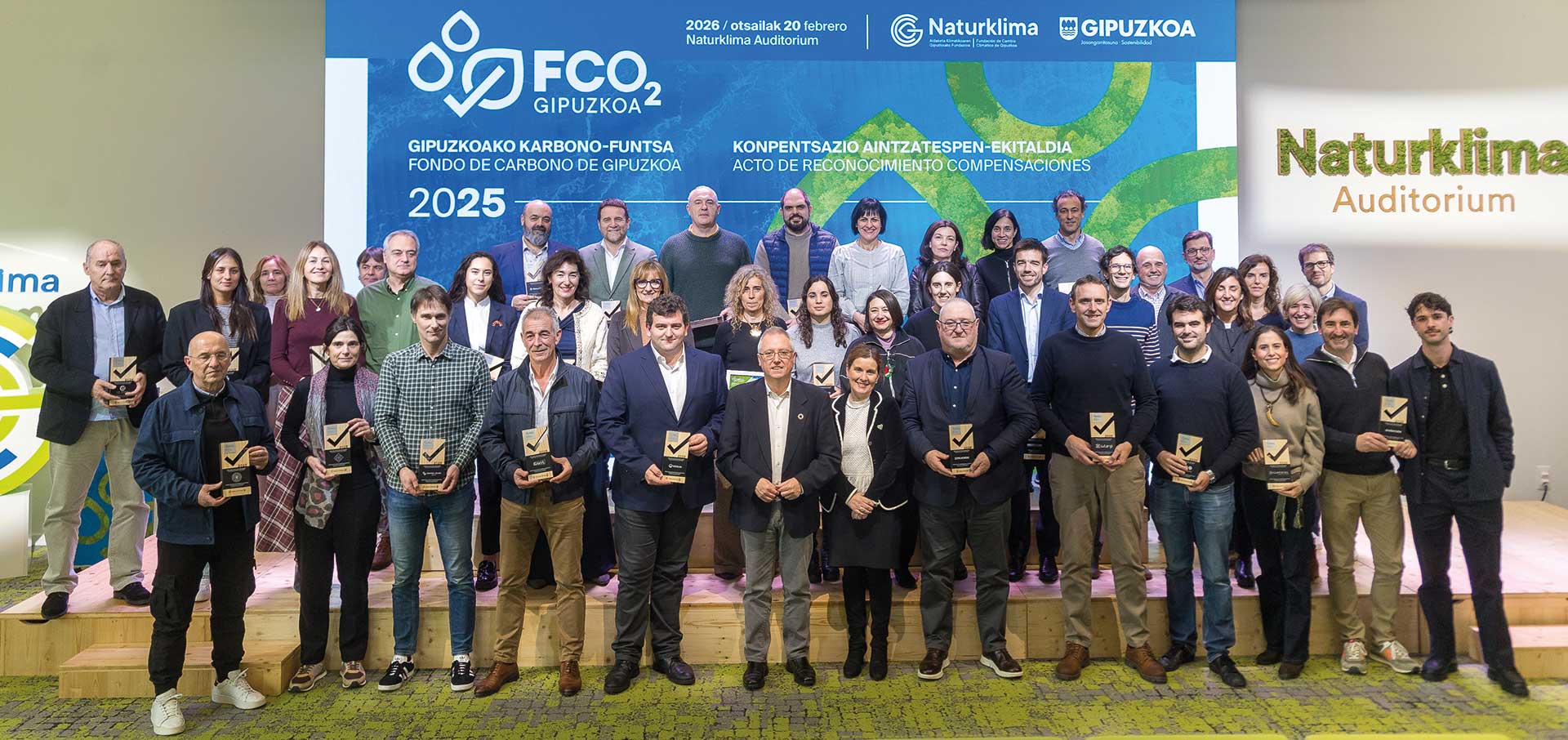
We haven't made the journey alone. We have been joined by travelling companions whose endeavours have created a stronger project. The first diagnosis was made together with Naider, who helped us to analyse our initial situation and to identify the main areas of improvement. We then moved on to Creast, the company who help us to calculate our carbon footprint and who are by our side at every stage of analysis and improvement process. We have also joined forces with Renfe to promote more sustainable mobility alternatives for those coming to the Festival. And we have the backing of the Mugi pass offering transport discounts, launched by Gipuzkoa's Provincial Transport Authority. Lastly, thanks to the Gipuzkoa Voluntary Carbon Fund, promoted by the Provincial Council and Naturklima, we have been able to offset our CO₂ emissions thanks to local ecological restoration projects.
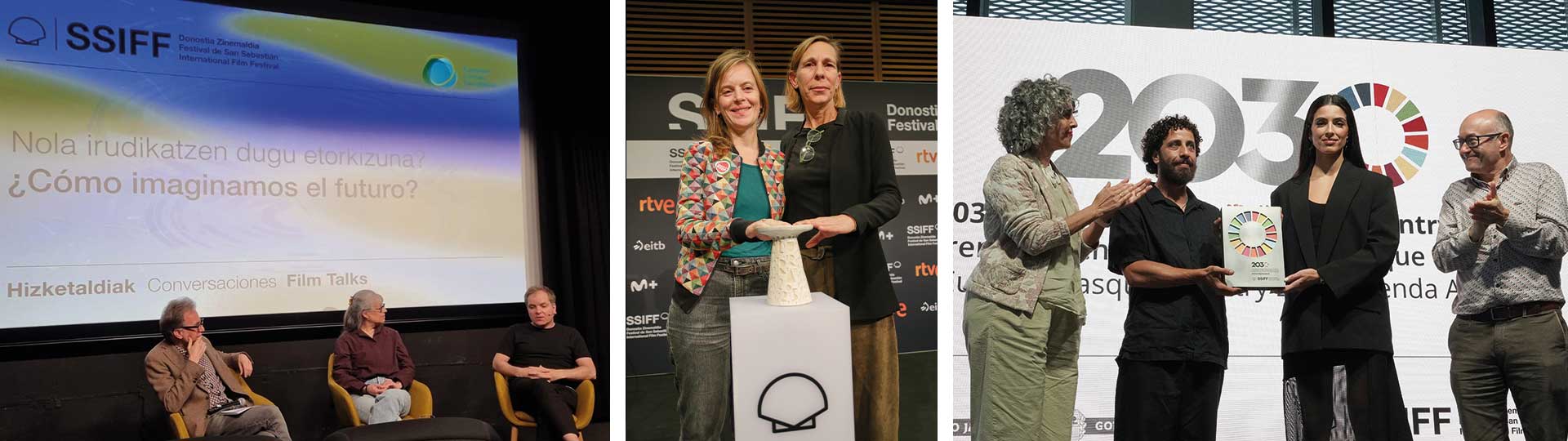

This process is also one of continuous learning. Over time we have added new ways of approaching this transition. The Festival perfectly understands the place it occupies and the symbolic value of an event of this kind being immersed in a decarbonisation process. But it is also important to remember what we're working with: the stories, the narratives, the films.
A festival does not only generate impact through its operations; it also does so through the ideas it circulates. And it is here that commitment takes on a new dimension.
Since its 63rd edition, Greenpeace has awarded the Lurra Prize, recognizing films that reflect the values of environmental protection and peace. More recently, three years ago, we began collaborating with the European Climate Foundation to focus precisely on this: on the stories and perspectives that address the climate issue. We want to show how cinema can broaden the conversation, raise new questions, and emotionally connect with a challenge that we often perceive as abstract or distant.
Today we can say that at this edition, the Festival's carbon footprint came to 1,965 tons of CO₂ equivalent (1,965,000 kg CO₂eq). This figure confirms a steady downwards trend. Since 2021, when 4,147,646.59 kg CO₂eq were recorded, we have reduced our emissions by 2,182,646.59 kg, translating into a drop of 52.64% in these six years.
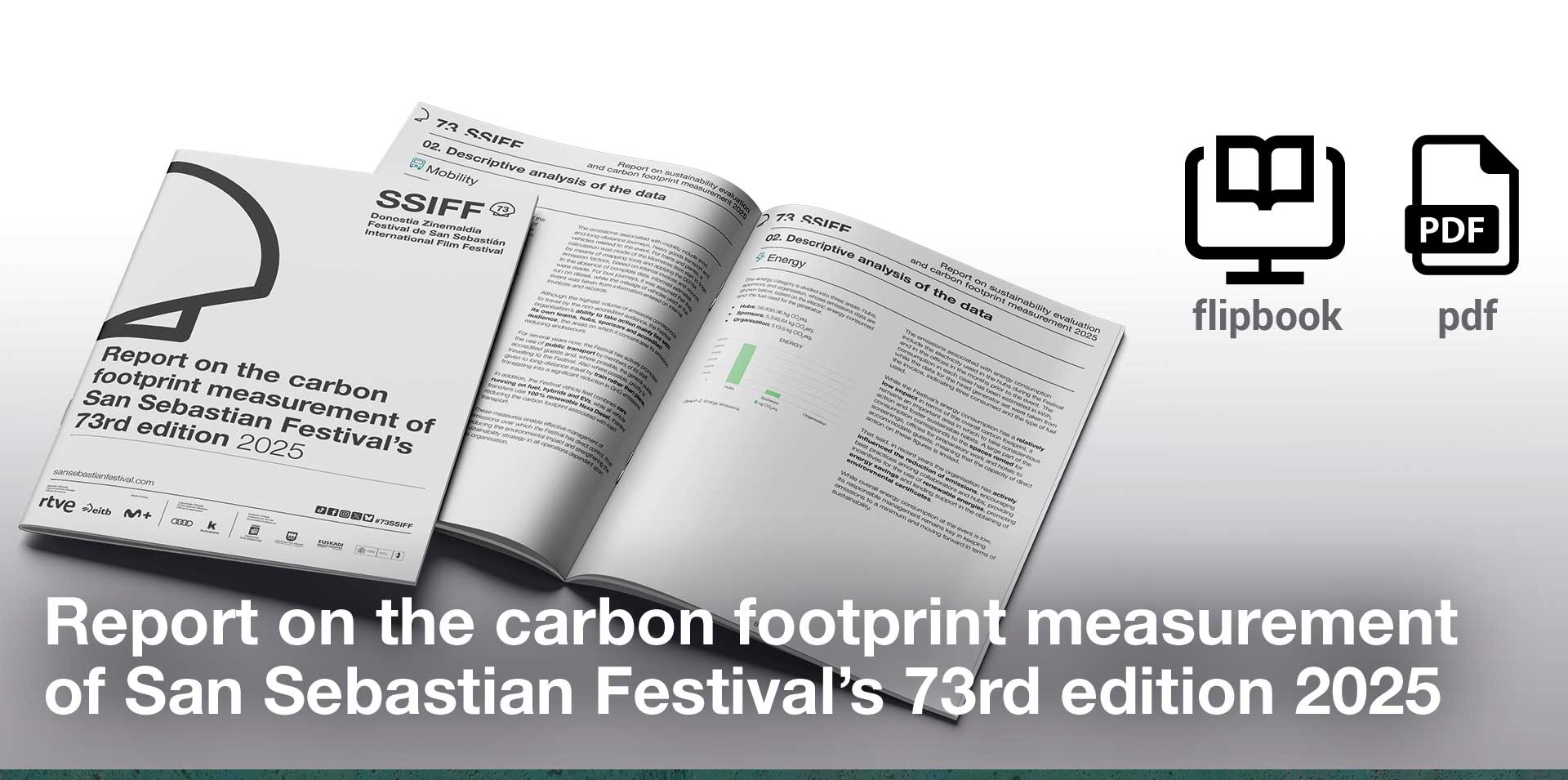
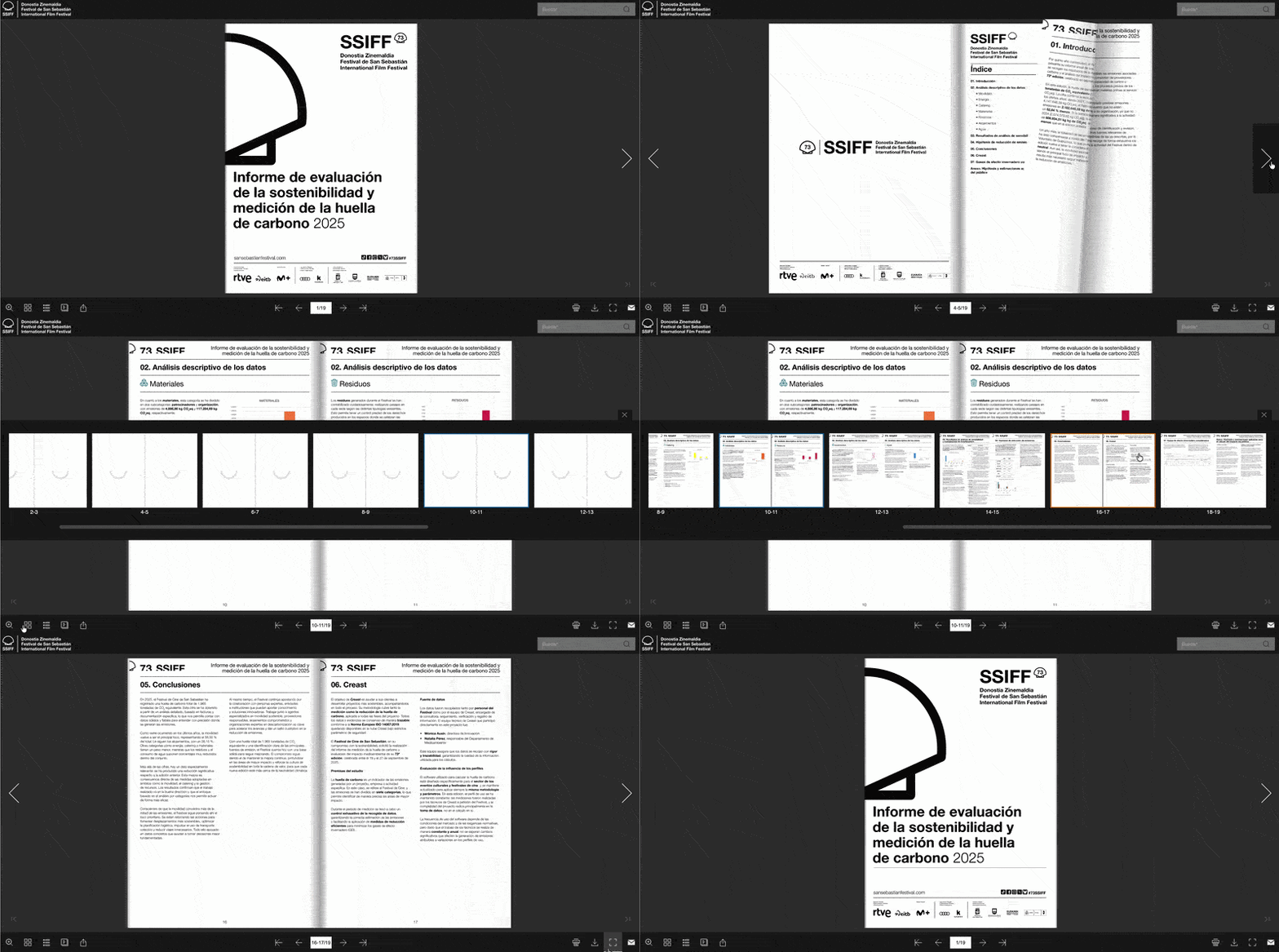
That's the context in which this newsletter is born. A space designed to compile and organise all of the information related to our environmental commitment, a meeting point from which to share every step we take along this road. We also want it to serve as tool for building a community, so that those who are a part of the Festival (its audience, professionals, collaborators) can closely follow the process and feel that they are a part of it too.
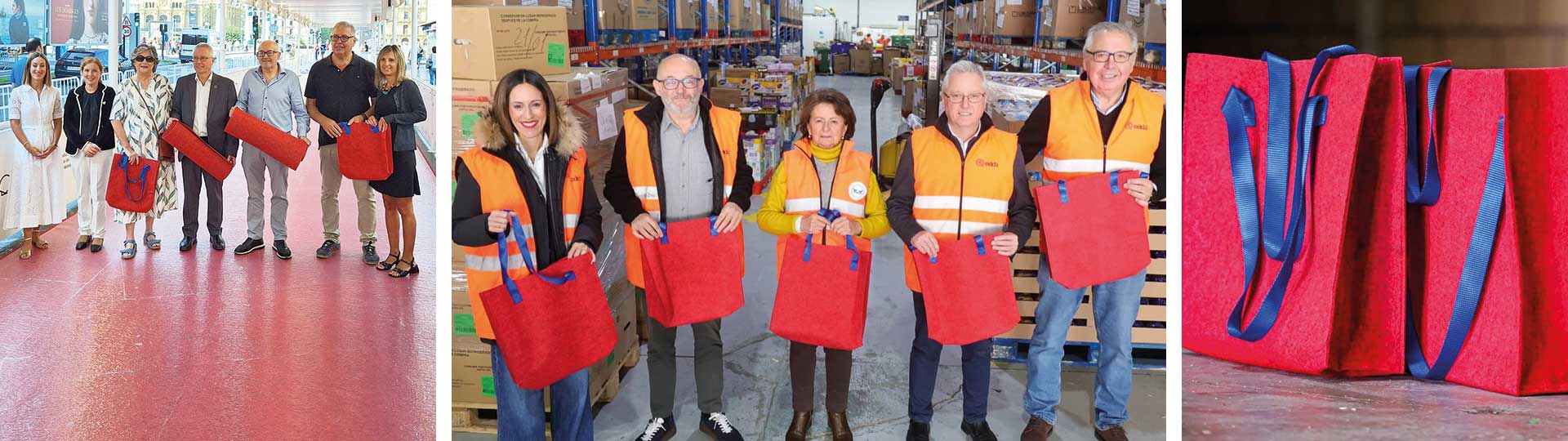
And, of course, this is also an open channel, a place to listen. Through our suggestion box, we can collect ideas, suggestions and comments that will help us to improve. Because if we've learned anything in these six years, it's that sustainability is not the final destination, but a collective process built step by step.

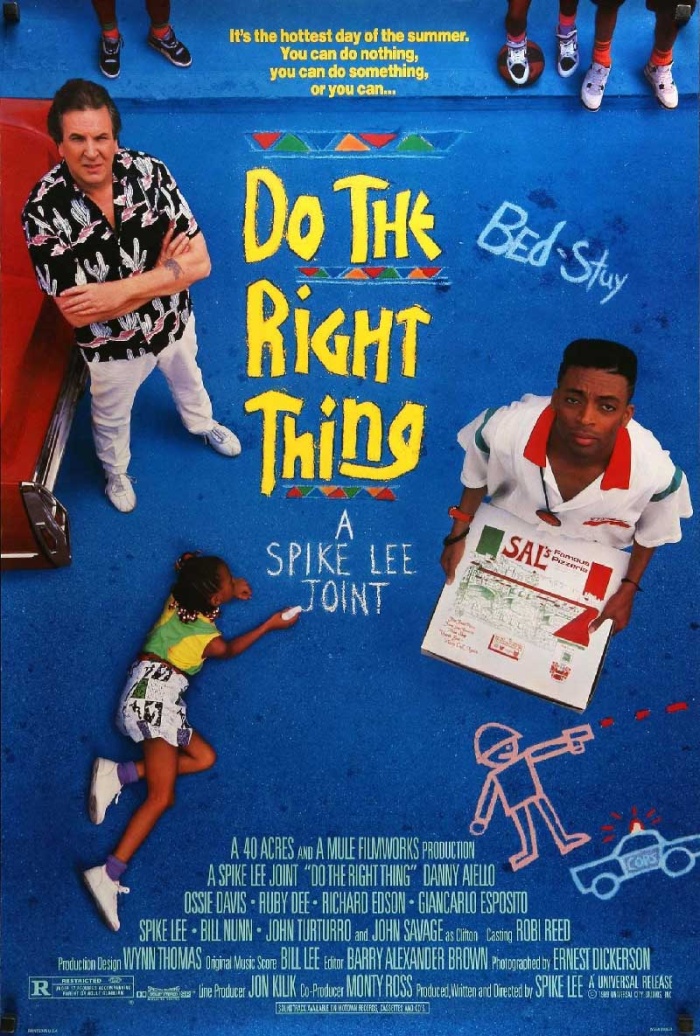
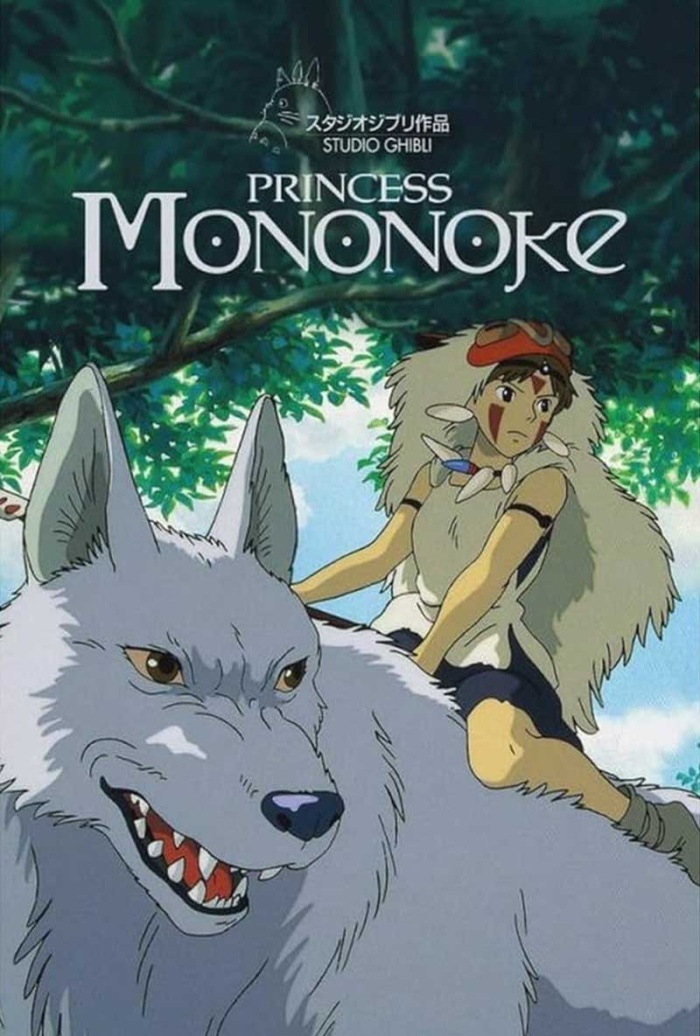
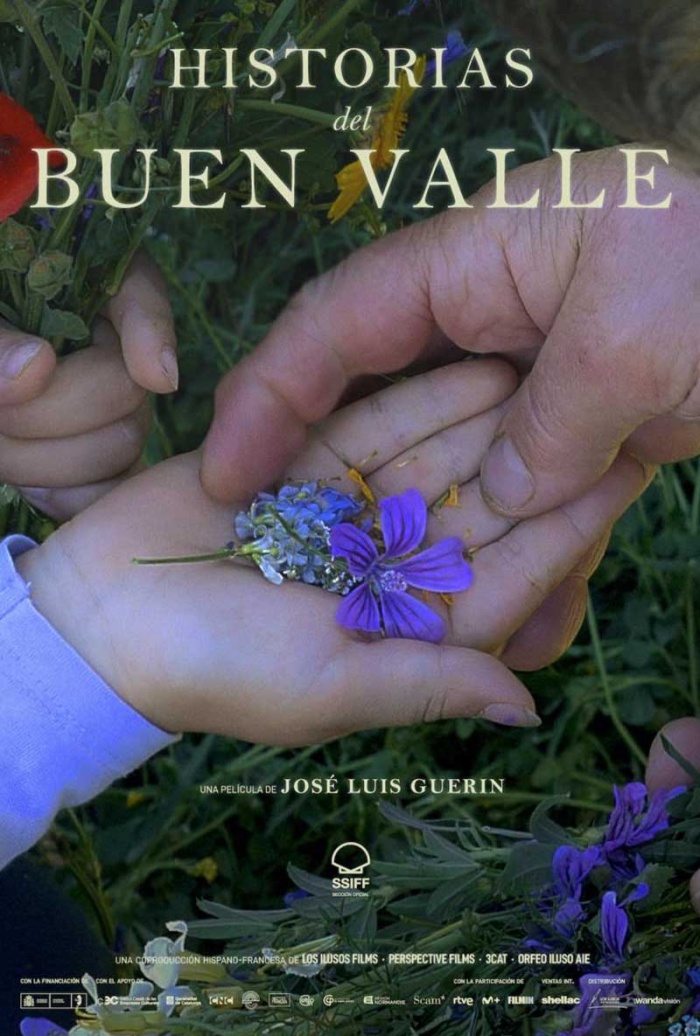
Aiming to expand imagination through a climate lens, each issue of the newsletter will highlight three films that explore the climate emergency from different angles. With a mix of genres and styles, these films not only invite us to reflect on the present but also reveal new ways of telling and understanding this shared challenge.

















Monday to Sunday from 09:00 to 14:00
and from 16:00 to 20:00